Two dyers can work from the same recipe, dip the same number of times and still pull cloth five shades apart. The indigo is rarely to blame. What separates them is what happened to the fabric in the hours before it went near the vat: how clean it was, how wet it was, and whether the fibre was genuinely open to receiving colour.
Indigo is unforgiving about preparation in a way that few dyes are. Get it right and you will see it in the first dip.
Indigo does not bond to fibre the way a fibre-reactive dye does. In the vat it is reduced to a soluble, yellow-green form that soaks into the cloth; once you lift the cloth into the air, oxygen turns it back into an insoluble blue pigment lodged inside the fibre. Most of that pigment sits in the outer layers — the familiar ring dye that gives indigo its soft, worn-in character and its habit of fading at the folds.
That mechanism explains almost everything about preparation. If the fibre is coated in sizing, softener, natural wax, lanolin or silk gum, the vat cannot reach the surface and you get pale patches that no number of extra dips will rescue. If absorbency is uneven, the colour is streaky. If the cloth still holds soap residue or hard-water minerals, the blue turns dull or grey. And if the scour was half-hearted, the colour crocks — rubbing off on your hands, your machine, your sofa.
Scouring is not rinsing. It means washing with enough heat, water and detergent or alkali to strip oils and finishes, without damaging the fibre. You know it has worked when a drop of water on the dry cloth sinks in at once instead of sitting proud on the surface.
These two are the most stubborn. Cotton arrives with natural waxes and pectins plus whatever the mill added: starch or PVA sizing, softeners, optical brighteners. Linen carries more pectin and lignin again, and often needs two goes.
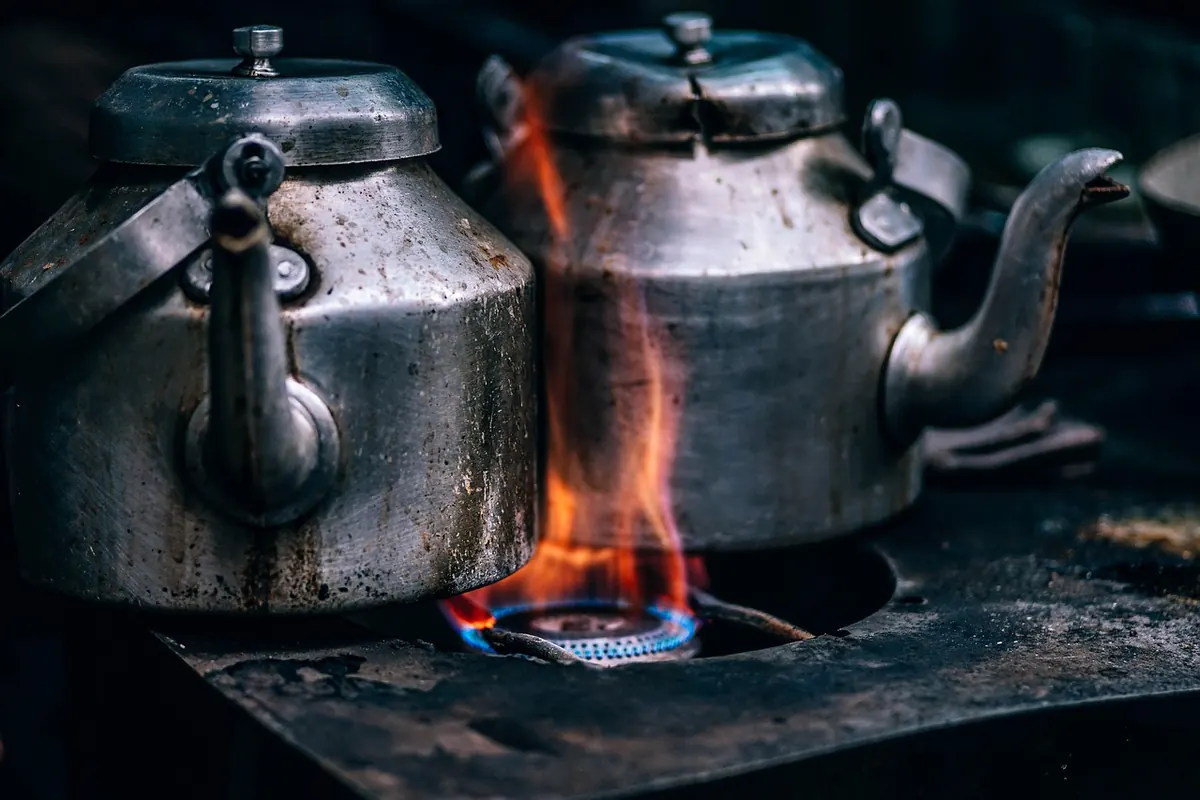
Fill a pot with enough water for the cloth to move freely, add soda ash (sodium carbonate — not baking soda) at roughly two teaspoons per litre, plus a small squirt of non-ionic detergent. Bring to a gentle boil and hold for 30 to 60 minutes, stirring now and then. Linen: give it the full hour and expect brown water. Rinse in hot water, then progressively cooler, until it runs clear and the cloth no longer feels slippery. Cotton and linen are the two fibres you can be brisk with.
If your silk is not degummed it will still carry sericin, which feels stiff and slightly rasping. Scour it in hand-warm water with a mild, pH-neutral soap, holding it for about 30 minutes and pressing the water through rather than rubbing. Rinse at the same temperature. Never wring silk, and keep soda ash well away from it — strong alkali dulls the lustre and weakens the fibre.
Wool's targets are lanolin and spinning oil, and its enemies are agitation and temperature shock. Use hand-warm water around 30–35°C with a pH-neutral wool wash or a little mild soap. Let it soak for 20 to 30 minutes, press gently, drain, and rinse at the same temperature. No soda ash: alkali plus friction equals felt. After the alkaline indigo vat, a final rinse with a splash of white vinegar restores the handle.
Indigo is a vat dye, and it needs no mordant. A mordant is a metal salt that fixes dyes such as madder, weld or cochineal to fibre; indigo attaches by being trapped as it oxidises, so an alum bath will not make your blue deeper or faster.
Mordanting matters when you are combining indigo with other dyes. Then two rules keep things predictable. Do the mordanting and the non-indigo dyeing first, and indigo last, because hot acidic mordant baths will shift a blue you have already built. And be careful with iron: it saddens indigo towards grey-green, which is sometimes exactly what you want and often is not. Test on a swatch.
For cotton and linen, a tannin pre-treatment — gallnut, sumac, quebracho — is sometimes used before indigo to deepen the shade. It is optional and a matter of taste. Worth knowing too: iron in your water or your pot dulls blues. Work in stainless steel or enamel, never bare aluminium or iron.
Soda ash and other vat chemicals are alkaline. Wear gloves and eye protection, work somewhere ventilated, and keep a bowl of clean water nearby for rinsing splashes.
Dry cloth is full of air. Air inside the fibre means the vat cannot reach it: the surface dyes, the interior stays pale, and you get the speckled, patchy result people usually blame on the vat.
Soak the scoured cloth in warm water with a drop of non-ionic wetting agent, or a little soap, for 15 to 30 minutes, until it is uniformly darker and noticeably heavier. Squeeze it gently — if bubbles come out, keep soaking. Then squeeze out the excess, but do not wring it dry, and take it straight to the vat. Cloth should enter damp, not dripping; dripping cloth cools and dilutes the vat and drags in oxygen. Keep prepared cloth covered and damp until it is used, and never let it dry out between wetting and dipping.
Keep a notebook. Note the fibre, the scour recipe, the timings, the number of dips and how long each piece hung in the air between them. Cut a small swatch from every batch, label it and keep it. Within a year you will have a record of your own vat and your own water that beats any recipe you can copy from someone else.
Store scoured fabric dry if you are not using it straight away, and re-wet it before dyeing. Damp cloth left in a bag grows mildew and smells of it.
Preparation costs you an hour or two, and it is the cheapest part of the whole process. It is also the part that decides whether your blue comes out even, deep and honest, or pale and patchy in a way no extra dip will fix.
Photo: jarmoluk / Pixabay